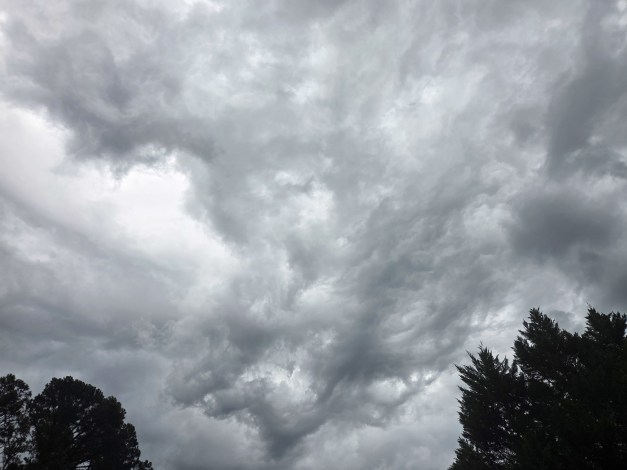
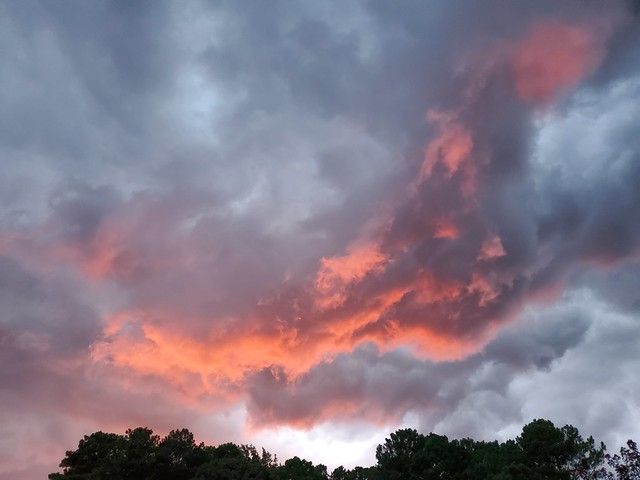
Moments before a recent thunderstorm, a layer of dark clouds raced beneath a cloud covered sky. I had never seen any clouds like this before, but they remind me that God “makes the clouds his chariot; he rides on the wings of the wind” (Psalm 104:3)
Moments before a recent thunderstorm, a layer of dark clouds raced beneath a cloud covered sky. I had never seen any clouds like this before, but they remind me that God “makes the clouds his chariot; he rides on the wings of the wind” (Psalm 104:3)
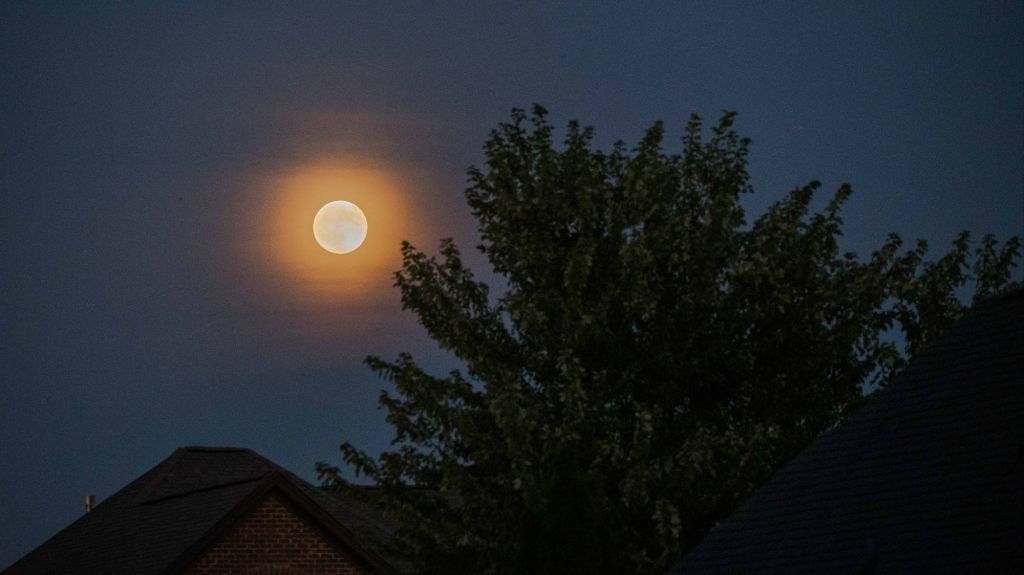
A lunar corona seen above a rooftop in Madison, Alabama.
I photographed this lunar corona with my 200mm lens — the longest I had on hand that night.
Coronas form through diffraction: as moonlight passes tiny water droplets in thin, high-altitude clouds, the light waves bend and spread, creating that glowing ring around the moon.
Photograph life as it happens with whatever camera you have.
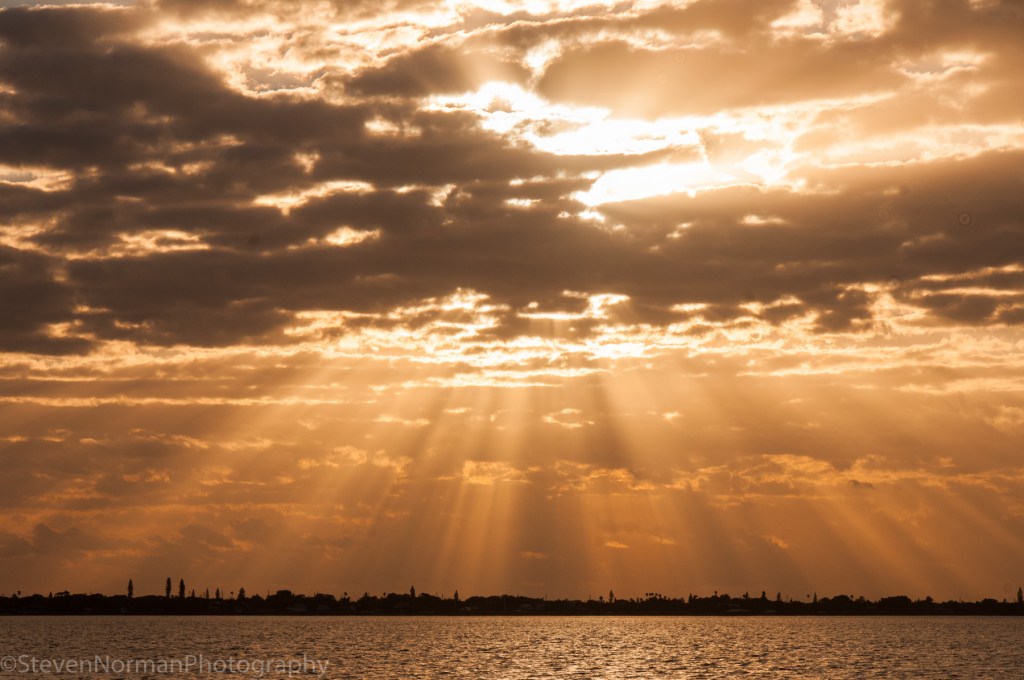
The sun’s rays embrace eveyone in this skyline I shot somewhere in my travels years ago.
The heavens proclaim his righteousness, and all the peoples see his glory. (Psalm 97:6, ESV)
The sun, clouds and sky are more than a natural phenomenon. They are messengers of God’s righteousness. They are speaking to us. They declare God’s righteousness—his equity, fairness, and justice.
How do we see God’s righteousness in the sky? Paul tells us God “did not leave himself without witness, for he did good by giving you rains from heaven and fruitful seasons, satisfying your hearts with food and gladness” (Acts 14:17, ESV).
The rain and sun reveal our Father’s righteous equity: “For he makes his sun rise on the evil and on the good, and sends rain on the just and on the unjust” (Matthew 5:45, ESV).
So each time we see the sun shining or the rain falling on everyone, regardless of their character, conduct, religion, ethnicity, language, or country of origin, it is a call to righteousness and love. We should hear Jesus say, “You have heard that it was said, ‘You shall love your neighbor and hate your enemy.’ But I say to you, love your enemies and pray for those who persecute you, so that you may be sons of your Father who is in heaven” (Matthew 5:43–45, ESV).
How have you seen God’s righteousness in the heavens?
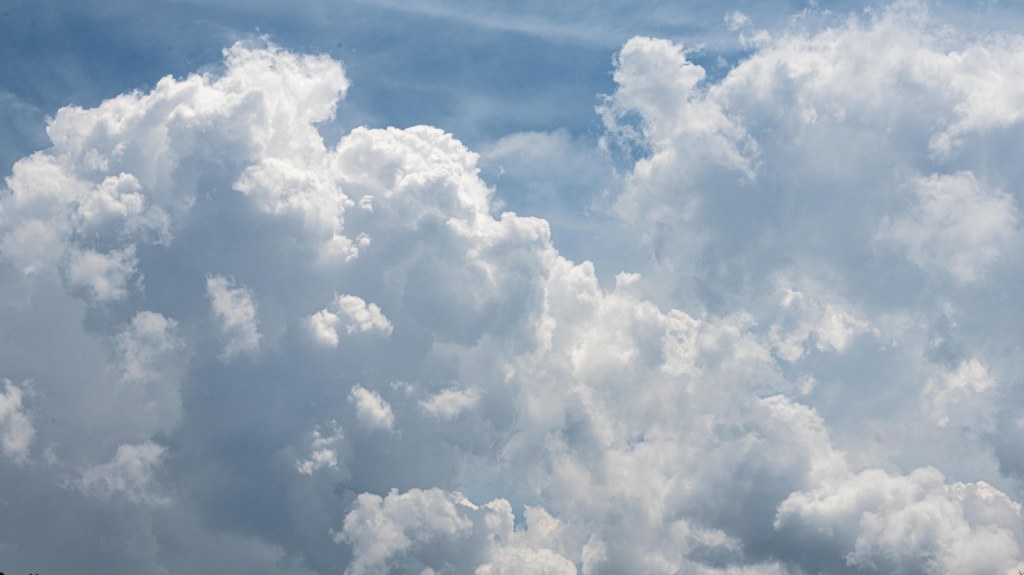
For he draws up the drops of water; they distill his mist in rain, which the skies pour down and drop on mankind abundantly. Can anyone understand the spreading of the clouds, the thunderings of his pavilion? Job 36:27–29
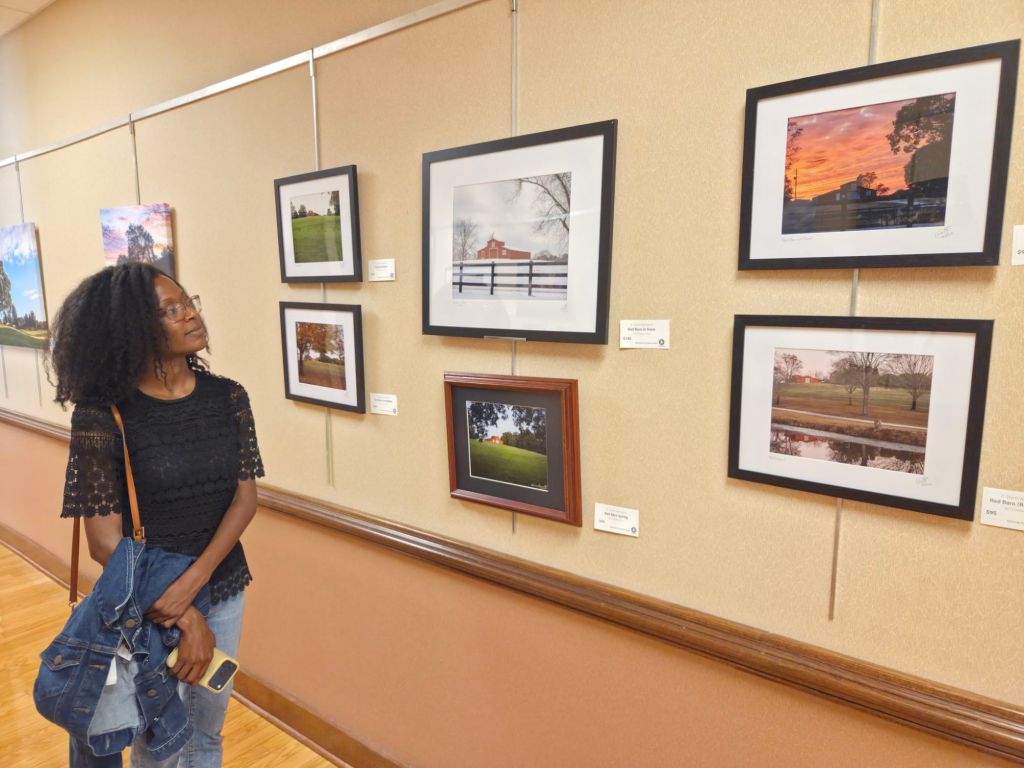
Charis McLarty admires photos of the Red Barn in my “Seasons of Lenora Park” photography exhibit. The collection is open Monday through Friday from 8:30 to 5:00 p.m. at the Bethesda Park Senior Center, 225 Bethesda Church Road, Lawrenceville, GA. The exhibit will close on June 30.
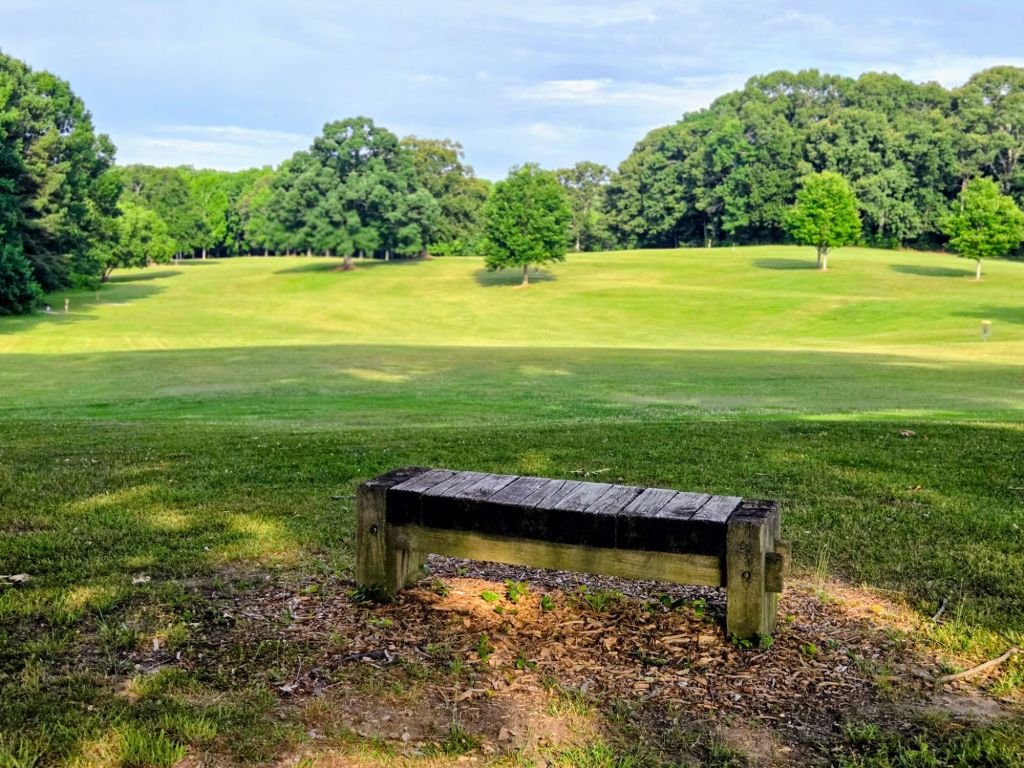
A bench invites me to stop and meditate.
Elihu told Job, “Hear this, O Job; stop and consider the wondrous works of God.” — Job 37:14
There are scenes that invite us to stop, sit down, and simply consider. Creation speaks — of God’s majesty, His greatness, infinite power, supreme authority, and unsearchable knowledge. Who can mix more beautiful blues? Who else can clothe the trees in varied shades of green, none clashing, all harmonious? Who carpets the lush, rolling meadow?
When I observe the majesty of His deeds (Ps. 19:1–4), I am reminded of my own weakness — my utter lack of understanding and knowledge. And in that place of smallness, I respond to His majesty the only way I know how: bowing in humble awe, and lifting my voice in praise.
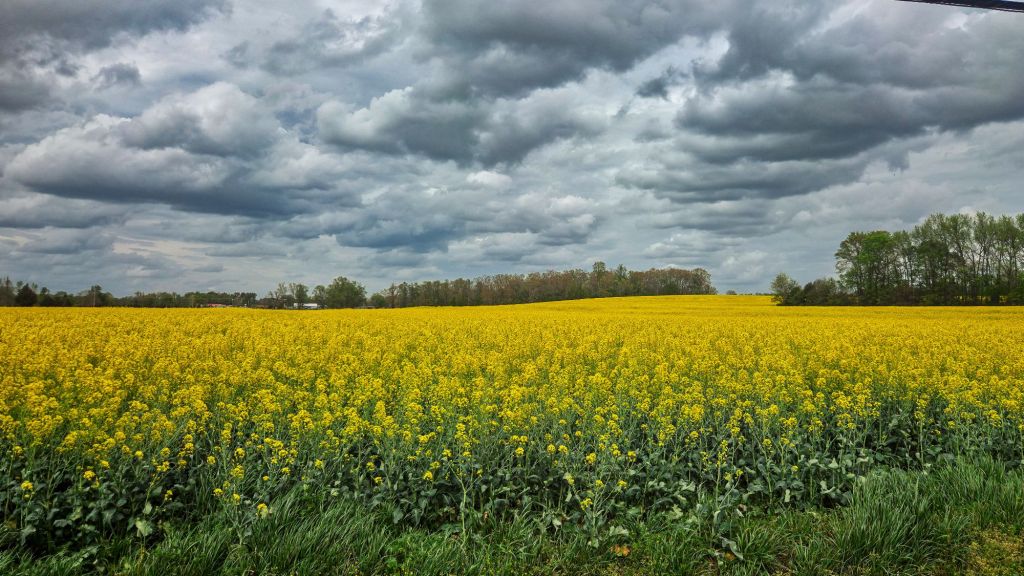
There’s something striking about driving through Hazel Green, Alabama in the spring and suddenly coming upon a field like this one — an endless sea of vivid yellow stretching all the way to the tree line, lying quietly beneath a dramatic, storm-heavy sky.
What you’re looking at is a field of blooming mustard greens, planted not for the dinner table, but for their beauty and their practical role as a ground cover crop. When mustard greens are allowed to bolt and flower, they transform into something truly spectacular — thousands of tiny yellow blossoms clustered together in a brilliant canopy that seems to glow even under overcast skies.
Ground cover crops like these serve a dual purpose. They delight the eye of every passerby and photographer lucky enough to catch them at peak bloom, but they are also quietly doing important work — protecting the soil from erosion, suppressing weeds, and returning nutrients to the earth. It’s one of those rare moments where agriculture and artistry are genuinely one and the same.
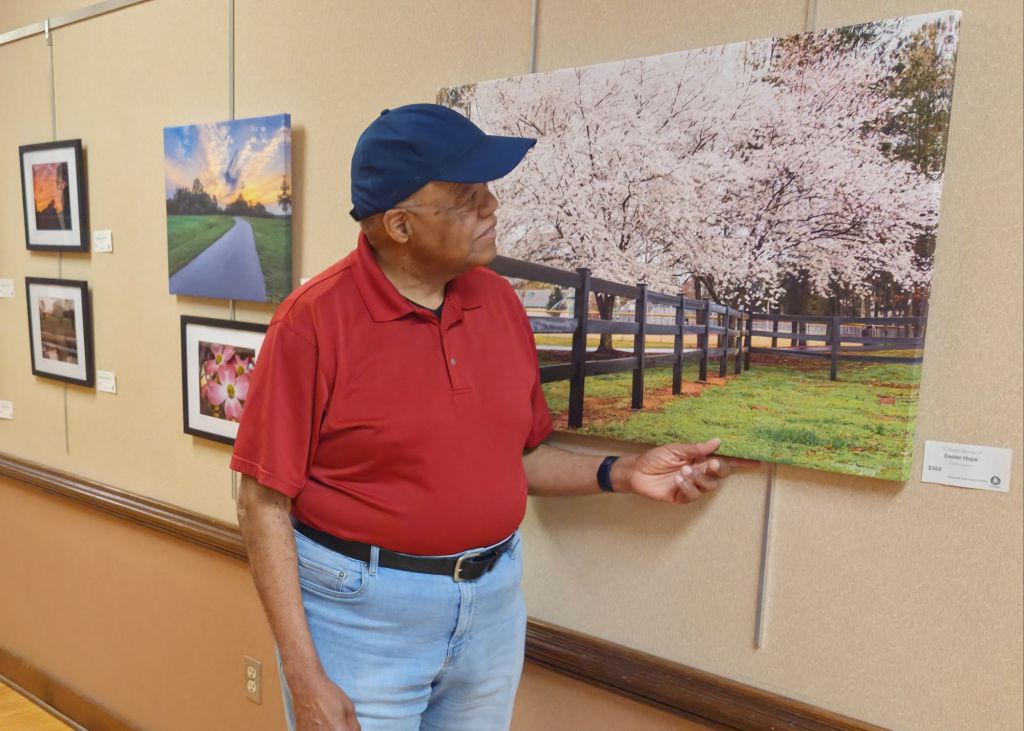
My photography exhibit,”Seasons of Lenora Park” is now open.
The exhibit features 32 photographs I have made over the past 15 years during my walks at Lenora Park.
In the photo above, I paused to reflect on “Easter Hope”—a 24×36 canvas of cherry blossoms symbolizing the resurrection of Christ and the renewal of life each spring.
The exhibit runs from April 1 through June 30 at the Bethesda Park Senior Center, 225 Bethesda Church Road, Lawrenceville, GA.
It is sponsored by Gwinnett Parks and Recreation.
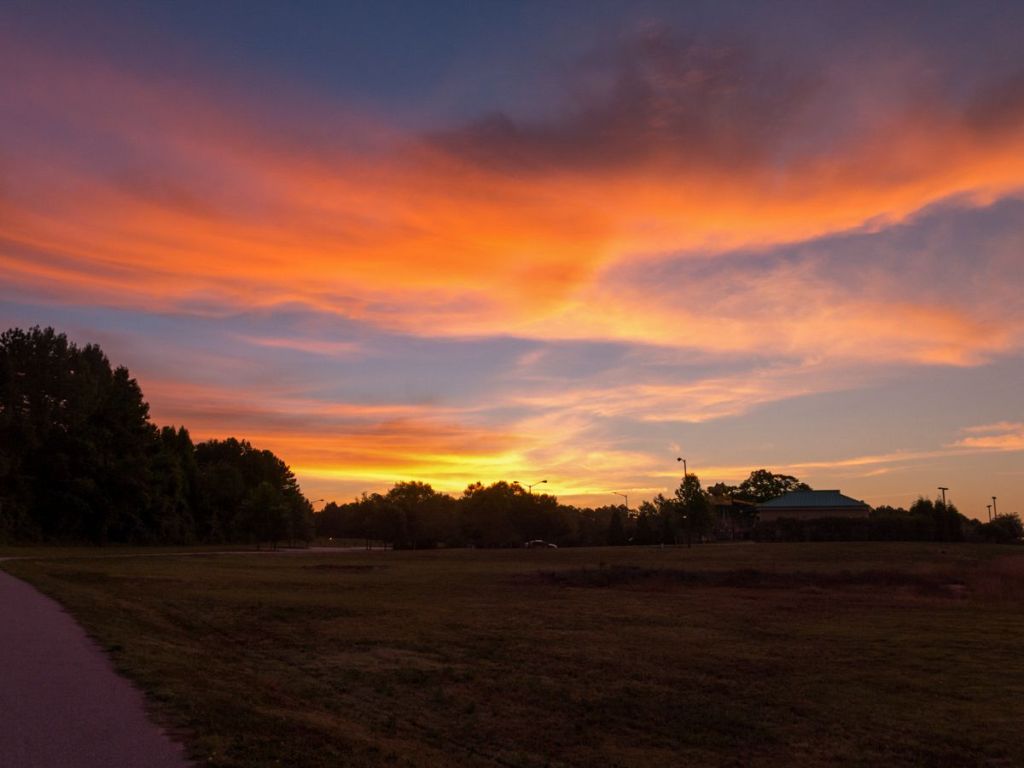
Some mornings I wake reluctantly. The bed is warm. The day ahead is uninviting.
Yet this ancient reminder from Marcus Aurelius that I learned in graduate school calls me to my purpose.
“In the morning when thou risest unwillingly, let this thought be present — I am rising to the work of a human being. Why then am I dissatisfied if I am going to do the things for which I exist and for which I was brought into the world? Or have I been made for this, to lie in the bed-clothes and keep myself warm?”
— Meditations, Book 5
We were made for more than comfort.
We were made to serve, to create, to love, to grow, and to glorify God.
Rise today with purpose. ☀️
 | Michael Bernard on A Lunar Corona over Alaba… |
 | Steven Norman on What Are the Heavens Telling… |
 | Carolyn Reid on What Are the Heavens Telling… |
 | Lucas on What Are the Heavens Telling… |
 | believeroriginal4102… on What Are the Heavens Telling… |

